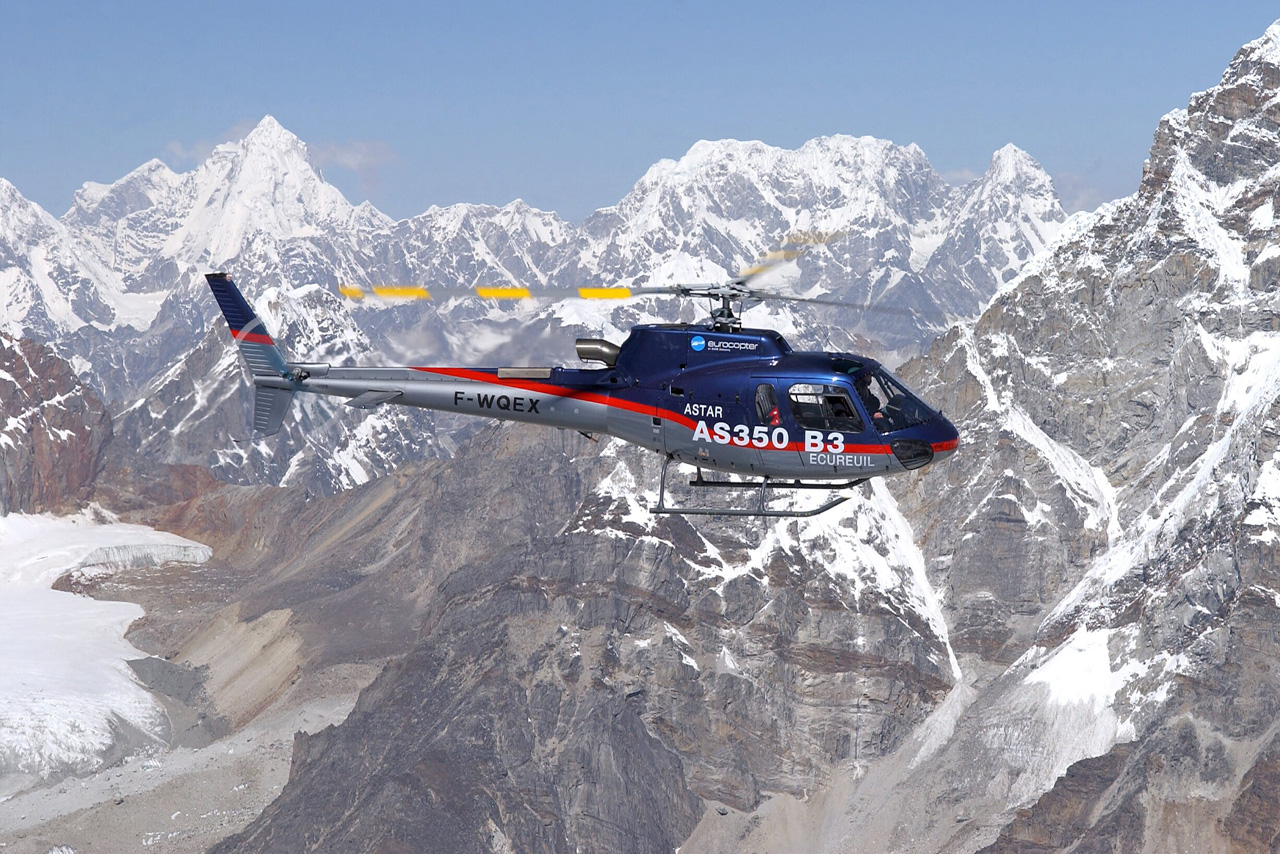
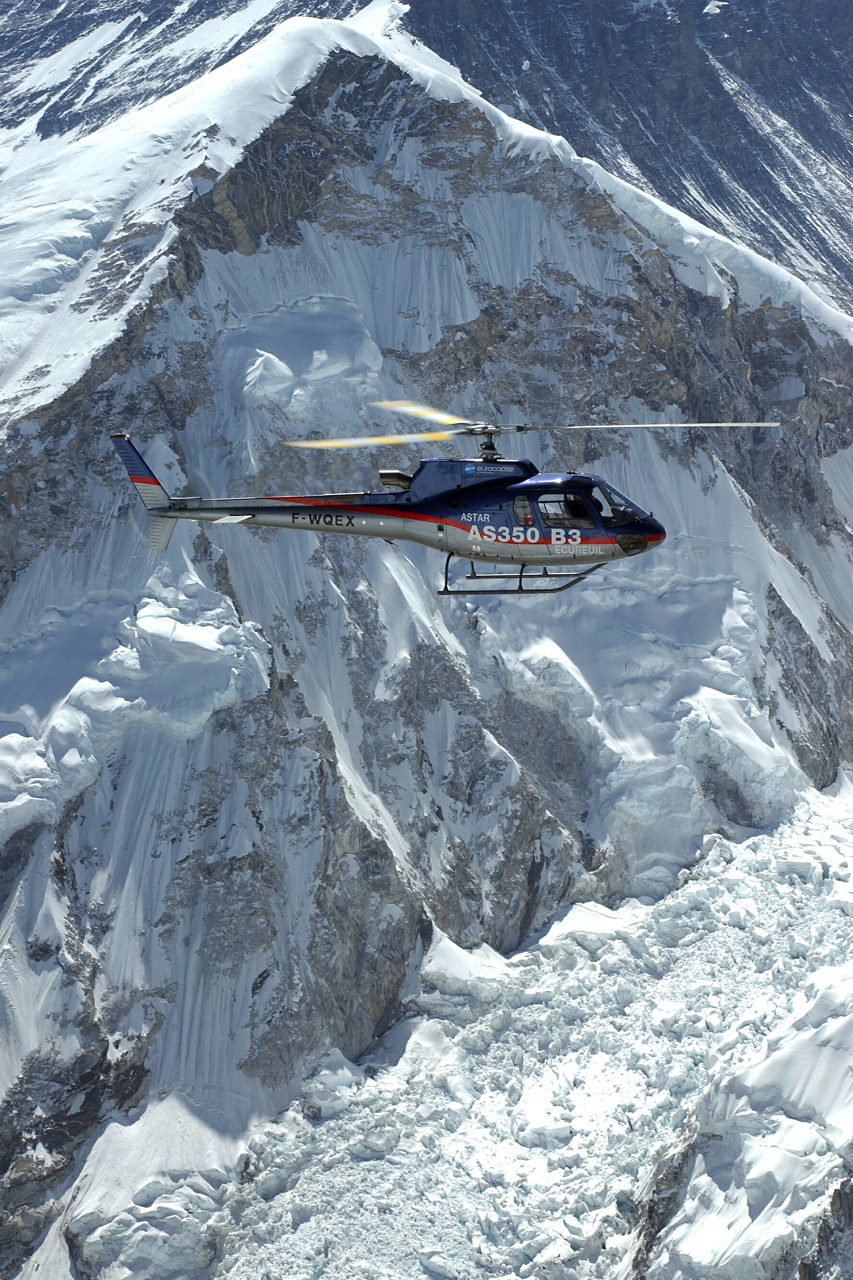
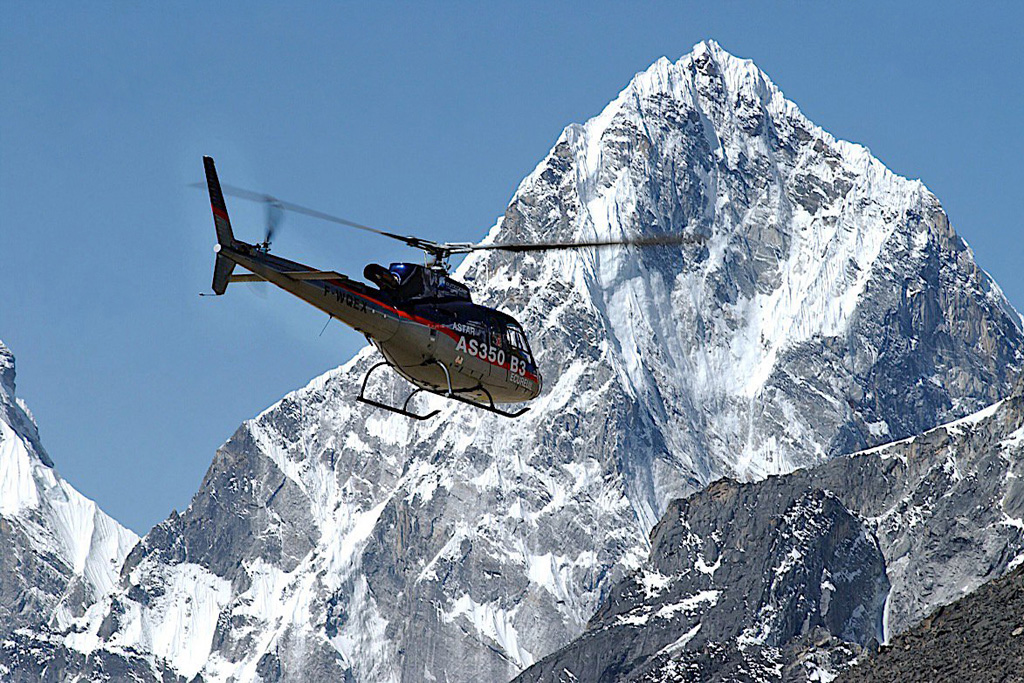
Le 14 mai 2005 à 7 h 08, heure locale, Didier Delsalle atteint le sommet de l’Everest, au Népal, aux commandes d’un Écureuil AS350 B3 de série. La Fédération aéronautique internationale impose que l’appareil reste posé au moins deux minutes pour homologuer le record. Didier Delsalle demeure sur la cime pendant 3 minutes et 50 secondes, par une température extérieure de -36 °C, avant de redécoller.
Il renouvelle l’exploit le lendemain, 15 mai, dans des conditions météorologiques plus difficiles. Plus de vingt ans après ces deux vols, son record du monde du plus haut décollage en hélicoptère demeure toujours en vigueur dans sa catégorie.
 (Photo Eurocopter)
L'hélicoptère Ecureuil AS350 B3 du record
(Photo Eurocopter)
L'hélicoptère Ecureuil AS350 B3 du record
 (Photo Eurocopter)
 (Photo Eurocopter)
 (Photo Eurocopter)
 (Photo Eurocopter)
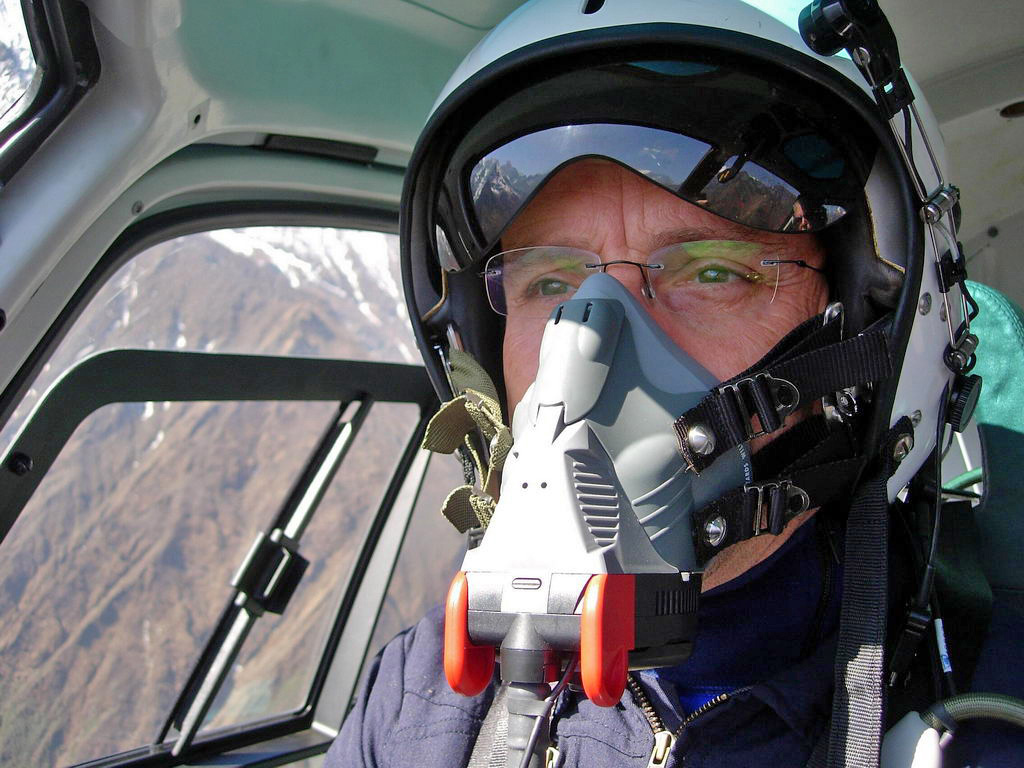
Didier Delsalle
(Photo Eurocopter)
Didier Delsalle
Une année de préparation et d’essais
La préparation de cette tentative a commencé près d’un an auparavant. L’objectif était de démontrer qu’un hélicoptère de série pouvait atteindre le toit du monde. L’appareil n’avait subi aucune modification particulière de son moteur ou de son rotor. Il avait simplement été allégé de certains équipements non indispensables à la mission et de ses aménagements de confort, soit un gain d’environ 120 kg.
Plusieurs vols et essais ont précédé la tentative sur l’Everest :
- des vols à 8 992 mètres puis à 10 211 mètres réalisés en avril 2004 à Istres, afin de vérifier le comportement du rotor et du moteur en très haute altitude ;
- trois records de temps de montée établis le 14 avril 2005 à Istres : 3 000 mètres en 2 minutes et 21 secondes, 6 000 mètres en 5 minutes et 6 secondes, puis 9 000 mètres en 9 minutes et 26 secondes ;
- un posé au col Sud de l’Everest, à 7 927 mètres, le 12 mai 2005. Ce vol établit un premier record du monde du plus haut décollage en hélicoptère, dépassant celui réalisé le 2 novembre 2004 par un Cheetah, dérivé du Lama, à 7 670 mètres.
Une fois au Népal, Didier Delsalle effectue plusieurs vols de reconnaissance pour étudier les différents itinéraires d’approche. À ces altitudes, les puissants courants ascendants et descendants rendent la progression particulièrement délicate. Le pilote doit progressivement repérer les zones favorables et celles qu’il faut éviter avant d’envisager une tentative vers le sommet.
 (Photo Eurocopter)
Préparatifs à Lukla, base opérationnelle de l’expédition située à 2 866 mètres d’altitude.
(Photo Eurocopter)
Préparatifs à Lukla, base opérationnelle de l’expédition située à 2 866 mètres d’altitude.
Un exploit resté unique
Ce vol spectaculaire a démontré les capacités de l’Écureuil AS350 B3 dans les conditions extrêmes de la très haute altitude. Il n’ouvrait toutefois pas la voie à des liaisons régulières ou touristiques vers le sommet de l’Everest : l’appareil était très allégé, le vol demeurait expérimental et sa réussite dépendait de conditions météorologiques exceptionnelles.
Le record de Didier Delsalle reste l’un des exploits les plus emblématiques de l’histoire de l’Écureuil. Il illustre aussi les performances qui ont fait de cette famille d’hélicoptères une référence pour les opérations en montagne et en haute altitude.
 (Photo André Bour - Helicopassion)
Didier Delsalle et l’Écureuil AS350 B3 du record au Salon aéronautique du Bourget, le 13 juin 2005, un mois après son exploit.
(Photo André Bour - Helicopassion)
Didier Delsalle et l’Écureuil AS350 B3 du record au Salon aéronautique du Bourget, le 13 juin 2005, un mois après son exploit.
Didier Delsalle raconte son exploit
Cette interview de Didier Delsalle a été réalisée par Rebecca Stokes pour le magazine américain Climbing. Elle a été publiée initialement sur Climbing.com.
Nous remercions Jeff Achey, directeur de la publication de Climbing, pour son autorisation de reproduction.
Traduction française : Helicopassion.
Le 14 mai 2005, Didier Delsalle, pilote d’essai chez Eurocopter, a affronté les conditions atmosphériques rencontrées à près de 9 000 mètres d’altitude pour poser son hélicoptère Écureuil AS350 B3 au sommet de l’Everest. Il a renouvelé l’exploit le lendemain.
Installé à Aix-en-Provence, Didier Delsalle pilotait depuis vingt-cinq ans et pratiquait les sports de montagne depuis plus longtemps encore. Ce posé en hélicoptère était une expérience sans objectif opérationnel immédiat, mais il soulevait déjà des questions sur l’avenir du secours aux alpinistes en très haute altitude et sur l’éventualité de vols touristiques. Le magazine Climbing a pu rencontrer le pilote lors du Salon aéronautique du Bourget.
Didier, vous avez rejoint Eurocopter en 1997. Comment êtes-vous arrivé dans l’entreprise ?
Je suis entré dans l’Armée de l’air française en 1979 comme pilote de chasse, puis je suis passé sur hélicoptère deux ans plus tard. Je suis pilote d’hélicoptère depuis 1981 et j’ai effectué des missions de recherche et de sauvetage pendant près de dix ans.
J’ai ensuite intégré l’École du personnel navigant d’essais et de réception, avant de passer cinq années au Centre d’essais en vol en France. Eurocopter m’a alors proposé de rejoindre l’entreprise, où j’ai travaillé dès le début comme pilote d’essai. Je suis responsable des hélicoptères légers, c’est-à-dire de la famille des monoturbines. Mais en tant que pilote d’essai, je vole sur tous les types d’hélicoptères, des plus petits aux plus gros.
Avez-vous participé aux records de temps de montée, notamment au vol à 10 211 mètres, ainsi qu’au posé au col Sud de l’Everest ?
Oui. Lorsque nous avons commencé à préparer l’aventure de l’Everest, nous devions tout d’abord vérifier que l’hélicoptère était capable de le faire. Nous avons utilisé un appareil de série, car nous voulions montrer à nos clients qu’un hélicoptère normal pouvait accomplir ce type de vol.
Nous devions ensuite nous préparer aux limites physiques rencontrées à très haute altitude. En France, nous avons vérifié que le rotor et le moteur permettraient d’atteindre ces altitudes. Je suis donc monté à 10 000 mètres au cours d’un vol d’essai. Pendant cette période, nous avons battu les records de temps de montée à 3 000, 6 000 et 9 000 mètres. C’était une bonne manière d’évaluer nos marges de sécurité et la puissance dont nous disposions.
Lorsque nous sommes arrivés au Népal, nous ne connaissions pas encore la zone dans laquelle nous allions voler. J’ai consacré les premiers vols à la découverte du terrain et à la recherche des meilleurs itinéraires pour approcher les différents sommets.
À ces altitudes, les vents peuvent atteindre 300 kilomètres par heure. Il fallait localiser les courants ascendants et descendants. Nous avons rencontré quelques surprises. J’ai notamment trouvé un courant ascendant si puissant que je pouvais presque monter sans utiliser la puissance du moteur. À l’inverse, il m’est arrivé d’appliquer toute la puissance disponible pour descendre, tout en ne perdant que très lentement de l’altitude. J’ai dû dresser une carte des zones à éviter et vérifier progressivement toutes nos estimations en montant de plus en plus haut.
Concernant le col Sud, nous étions presque certains de pouvoir nous y poser et en redécoller. Pour le sommet, en revanche, nous n’en savions rien. Au départ, nous n’espérions pas aller beaucoup plus haut que le col Sud. Puis, peu à peu, j’ai compris qu’il me serait peut-être possible de me poser au sommet.
Vous vous êtes posé le matin du 14 mai, puis vous avez recommencé le lendemain. Pourquoi avoir décidé d’effectuer deux posés ?
Quand vous le faites une première fois, vous vous dites : « J’ai eu beaucoup de chance, c’était peut-être un miracle. » Pour prouver que ce n’en était pas un, je l’ai fait une seconde fois. Les conditions météorologiques étaient pourtant moins bonnes le deuxième jour.
Nous ne voulions pas attendre trop longtemps une amélioration, car nous savions que des alpinistes se trouvaient sur la montagne. L’un des principes de cette mission était de ne pas les mettre en danger. J’ai donc décidé de tenter le posé dans des conditions limites. Avec une meilleure météo, il y aurait eu beaucoup plus d’alpinistes sur le sommet, et je ne voulais blesser personne ni provoquer une avalanche avec le souffle du rotor. Réussir l’ascension de l’Everest est quelque chose de tellement extraordinaire.
Quelles sont les particularités de l’Écureuil AS350 B3 ? L’appareil avait-il reçu des modifications spéciales pour voler en altitude ?
Il était important pour nous d’utiliser un hélicoptère de série. Cet appareil devait d’ailleurs entrer en service à la fin du mois. La seule modification concernait sa masse. Nous avons retiré tous les équipements de confort qui n’étaient pas nécessaires, notamment les sièges inoccupés, ce qui nous a permis de gagner environ 120 kg. Je n’avais également emporté qu’une heure de carburant.
Quelles adaptations étaient nécessaires pour le pilote ? Portiez-vous un masque à oxygène ? La cabine de l’hélicoptère était-elle pressurisée ?
Je portais un masque à oxygène, car je n’étais pas acclimaté à la haute altitude. J’avais décollé de 2 900 mètres.
Quel est votre hélicoptère préféré ?
J’aime beaucoup les monoturbines. Le B3 est un appareil très performant, que l’on peut même faire évoluer sur le dos. Il ne faut pas oublier que j’ai commencé comme pilote de chasse et que j’aime toujours effectuer des manœuvres.
Vous disposiez d’une autorisation d’un mois pour vous poser sur l’Everest. A-t-il été difficile d’obtenir l’accord du gouvernement népalais ?
La procédure était un peu compliquée. Nous sommes restés au Népal du 2 au 24 mai, mais nous avions commencé à travailler avec le gouvernement dès le mois de janvier afin d’obtenir l’autorisation. Nous avions remis aux autorités népalaises le programme d’essais en vol que nous avions prévu, avec les vols, les posés et les différentes approches.
Pendant votre séjour au Népal, vous avez également effectué une mission de sauvetage pour le gouvernement népalais. Vous avez secouru deux randonneurs japonais, n’est-ce pas ?
Oui. Les deux randonneurs se trouvaient à environ 5 000 mètres d’altitude. L’un était épuisé et l’autre souffrait du mal aigu des montagnes. J’ai dû attendre deux jours à cause de la météo. Lorsque le temps s’est dégagé, il ne m’a fallu que quinze minutes pour les rejoindre et quinze minutes pour revenir. Cela leur a évité près de quatre jours de marche.
Qu’est-ce qui vous a motivé à poser un hélicoptère sur l’Everest ? Cette montagne vous fascinait-elle particulièrement ?
La première motivation est liée à la nature humaine : l’être humain cherche toujours à aller plus vite, plus loin et plus haut. Ensuite, j’avais lu de nombreux livres consacrés à l’Everest, car c’est une montagne mythique.
J’avais lu les récits des drames qui s’y étaient déroulés, notamment celui de 1996, et j’espère qu’un jour nous serons capables de secourir des personnes à une telle altitude. J’ai effectué des missions de recherche et de sauvetage pendant dix ans et, au fond de moi, je suis toujours un pilote de sauvetage.
Lorsque vous avez dans votre hélicoptère une personne que vous venez de sauver, vous pouvez lire quelque chose de très profond dans son regard. Elle vous dit merci sans même avoir besoin de parler. C’est le genre de chose que l’on n’oublie jamais.
Quelle a été la partie la plus difficile du posé sur l’Everest ?
Le plus difficile a été de trouver le bon itinéraire pour atteindre le sommet, en raison de la puissance extraordinaire des courants ascendants et descendants.
À cette altitude, le vent est si violent que l’on ressent véritablement la force de la nature. On comprend que cette force dépasse tout ce que l’être humain peut produire. Il faut apprendre à comprendre le fonctionnement de la montagne.
Pour trouver la bonne manière de se poser, il faut en quelque sorte être accepté par elle. Si vous essayez de forcer la montagne, elle vous rejettera. Il faut avancer lentement et avec beaucoup de prudence.
Pensez-vous que cet exploit pourrait donner naissance à une activité touristique permettant de se poser au sommet de très hautes montagnes ? Dans combien d’années les hélicoptères pourraient-ils voler de manière relativement sûre à de telles altitudes ?
J’ai lu dans certains journaux qu’il serait possible d’emmener des touristes au sommet de l’Everest. Cela n’a aucun sens. Dans un avenir proche, c’est totalement impossible. Il s’agissait d’un vol expérimental, et non d’un vol commercial ou touristique.
Garantir un posé au sommet de l’Everest dans cinq, six ou sept ans ? Je ne le pense pas. C’est beaucoup trop difficile. Même avec un hélicoptère très puissant, les forces que l’on peut rencontrer là-haut restent supérieures à celles de l’appareil. Il ne servirait à rien de risquer la vie d’un pilote et d’un copilote.
Même pour le sauvetage, je ne pense pas que cela devienne réaliste au sommet. Il est possible de secourir assez régulièrement des personnes jusqu’à environ 7 000 mètres. Au-delà, cela devient extrêmement difficile.
Envisagez-vous de vous poser sur d’autres montagnes ?
Pas pour le moment. Ce type de vol ne représente qu’une partie de mon métier. Nous avons beaucoup d’autres essais à réaliser, notamment des essais dont le public ne connaît généralement pas l’existence, comme la simulation d’une panne moteur en vol.
Je ne cherche ni un nouveau record ni la célébrité. J’essaie simplement de vivre ma vie. Nous verrons ce que l’avenir nous réserve, mais il sera difficile de faire mieux que ce record.
Pratiquez-vous l’alpinisme ?
Je suis un alpiniste du dimanche. Je pratique la montagne pour le plaisir, mais le fait d’avoir volé sur l’Everest m’a fait prendre conscience de la force extraordinaire des êtres humains capables d’en réaliser l’ascension.
Je reste très humble et très respectueux en montagne. Je ne peux pas me comparer aux véritables alpinistes de l’Everest. J’ai beaucoup de respect pour ceux qui grimpent sans assistance, pour les Sherpas et pour les membres des grandes expéditions.
Je n’aimerais toutefois pas participer à une expédition commerciale dans laquelle tout serait préparé à ma place. J’aime être autonome et je me contente de sommets beaucoup plus modestes, comme le mont Blanc.
Quels autres sports pratiquez-vous ?
Je fais du ski et un peu d’escalade, mais seulement le dimanche. Je ne prétends pas être très expérimenté. J’aime ces activités, mais je manque de temps. Il faut beaucoup pratiquer pour progresser dans ces sports et je suis absent de chez moi six mois par an. Lorsque je rentre, je préfère consacrer mon temps à ma femme et à mes enfants.
Images : crédits sous chaque image - Textes : André Bour et Rebecca Stokes (interview) • Crédits & contributeurs
Publié le 22 septembre 2005, mis à jour le 22 juillet 2026