Military cargo helicopters
Helicopters designed to carry troops, cargo and vehicles in their hold, and deliver them directly where there are no runways or infrastructure.
 (Photo André Bour - Helicopassion)
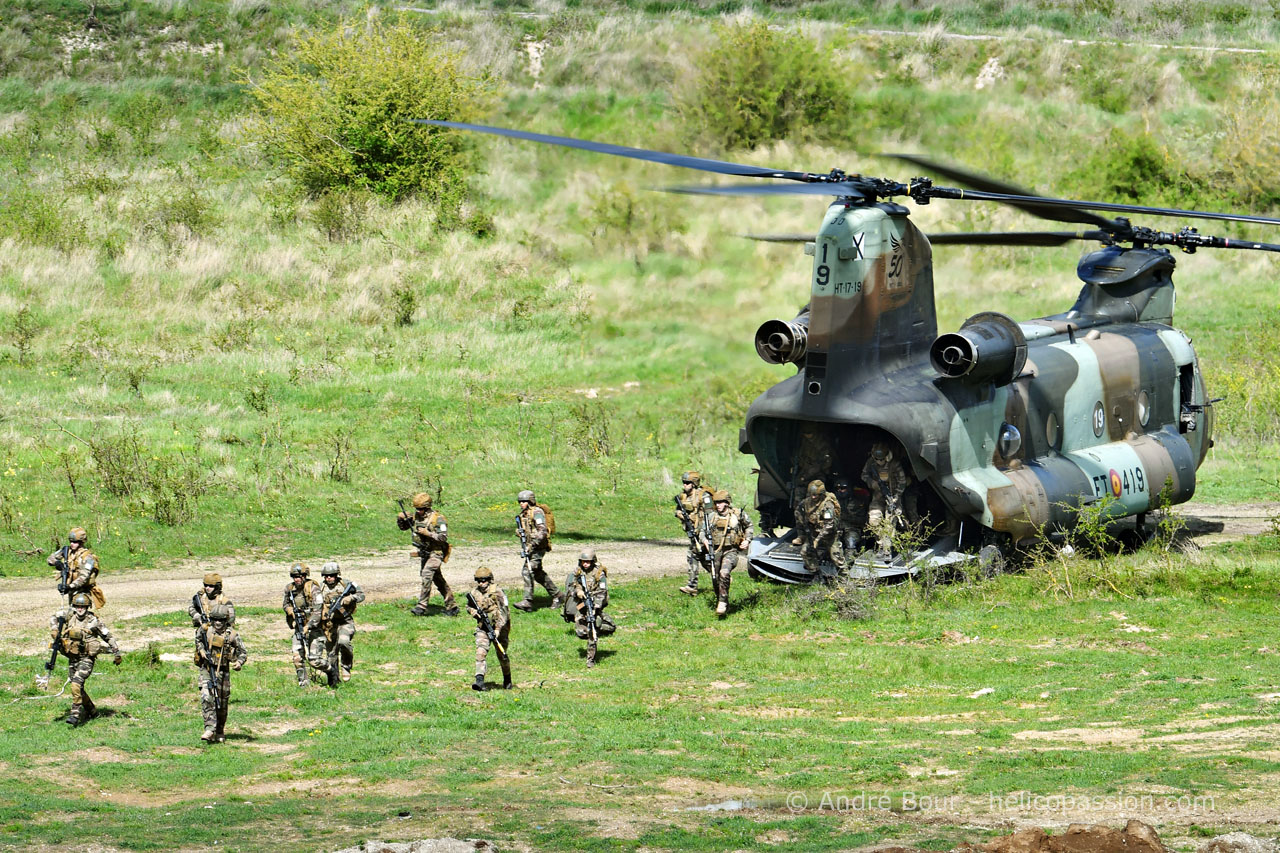
Troops disembarking from a Spanish CH-47 Chinook through the rear ramp during Exercise Orion 2023.
(Photo André Bour - Helicopassion)
Troops disembarking from a Spanish CH-47 Chinook through the rear ramp during Exercise Orion 2023.
Flying cargo holds
Transporting troops is one of the historic missions of military helicopters. But some aircraft go much further: their cabins are designed as true cargo holds, capable of carrying troops, freight and, in the largest aircraft, vehicles.
A wide rear ramp makes loading easier, while the seats can be folded or removed to clear the floor. Tie-down points, loading winches and cargo-handling equipment allow the cabin to be quickly adapted to the mission.
This architecture can be found on aircraft of very different generations and sizes, from the CH-46 Sea Knight to the gigantic Mi-26.
 (Photo Alexander Kelly - US Army)
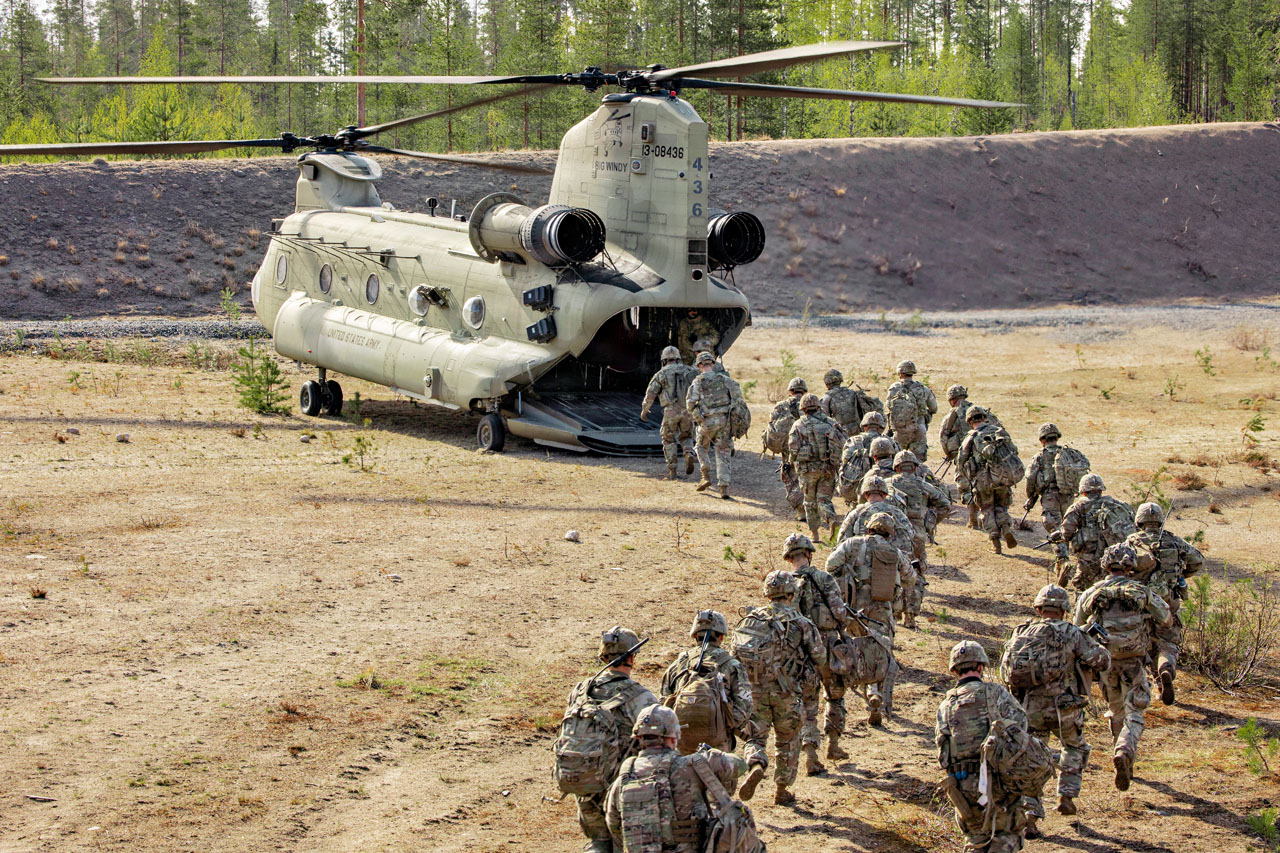
Troops boarding a US Chinook through the rear ramp during Exercise Sword 26 in Finland, 15 May 2026
(Photo Alexander Kelly - US Army)
Troops boarding a US Chinook through the rear ramp during Exercise Sword 26 in Finland, 15 May 2026
 (Photo US Marines)
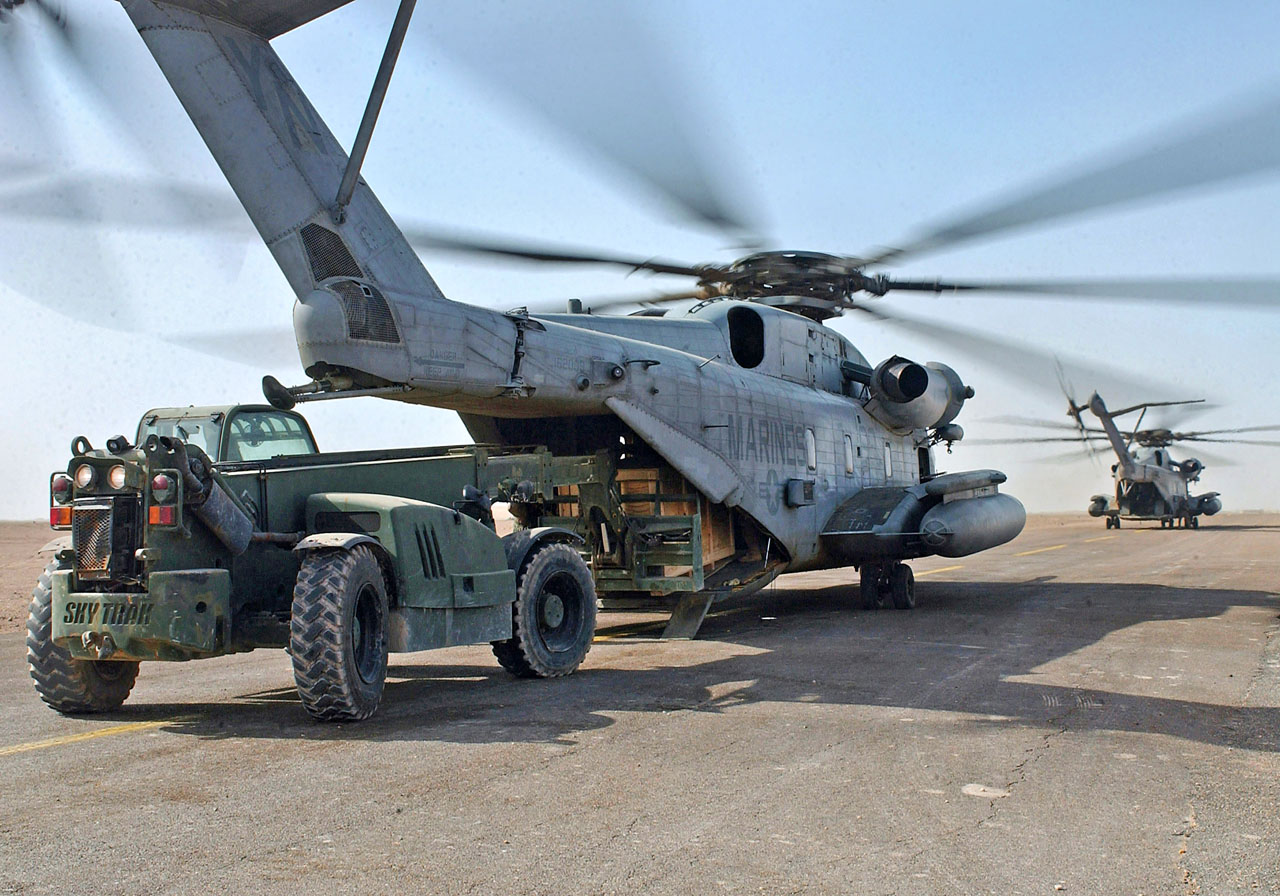
Pallets being loaded into a CH-53E at Al Taqaddum, Iraq, 28 January 2005
(Photo US Marines)
Pallets being loaded into a CH-53E at Al Taqaddum, Iraq, 28 January 2005
How much cargo space?
The capabilities of these aircraft vary considerably. The number of troops carried provides a useful first indication, although their individual equipment can reduce these figures. Cargo hold volume gives a better idea of the space actually available for the complete load: troops, freight or vehicles.
| Helicopter | Troops | Cargo hold dimensions | Volume |
|---|---|---|---|
| NH90 | 20 | L 4.8 m x W 2 m x H 1.6 m (1.8 m on the Swedish version) | 15.2 m³ |
| S-92 / CH-148 Cyclone | 19 | — | 19.8 m³ |
| V-22 Osprey | 24 | L 7.4 m x W 1.8 m x H 1.8 m | 20.9 m³ |
| Mi-17 / Mi-171 | 24–36 (depending on version) | — | 23 m³ |
| CH-46 Sea Knight | 25 | L 7.3 m x W 1.8 m x H 1.8 m | 24.5 m³ |
| AW101 Merlin | 27–38 (with three rows of seats) | L 6.5 m x W 2.25 m x H 1.8 m | 30.7 m³ |
| CH-47 Chinook | 33 | L 9.3 m x W 2.3 m x H 2 m | 42.5 m³ |
| CH-53G | 36 | L 9.1 m x W 2.3 m x H 2 m | — |
| CH-53E Super Stallion | 37–55 (with three rows of seats) | L 9.1 m x W 2.3 m x H 2 m | — |
| CH-53K King Stallion | 30 | L 9.1 m x W 2.6 m x H 2 m | 49.1 m³ |
| Mi-26 | 82 | L 12 m x W 3.2 m x H 3 m | 120 m³ |
The table reveals a few surprises. The CH-53K, for example, is a far more capable cargo transport than previous CH-53 generations, yet its standard configuration provides only 30 troop seats. Similarly, the V-22 carries only 24 combat-equipped troops.
From the CH-46 to the Mi-26
CH-46 Sea Knight: the forerunner
With its tandem-rotor configuration and rear ramp, the CH-46 Sea Knight already incorporated the main features of a modern cargo helicopter. It could carry Marines and their equipment directly from amphibious ships to the area of operations.
This capability becomes particularly important during an amphibious assault: the helicopter can cross the coastline without requiring a port or other infrastructure and deliver troops and equipment directly ashore. For decades, the CH-46 was one of the US Marine Corps' primary means of providing this mobility.
 (Photo Johnny BIVERA - USMC)
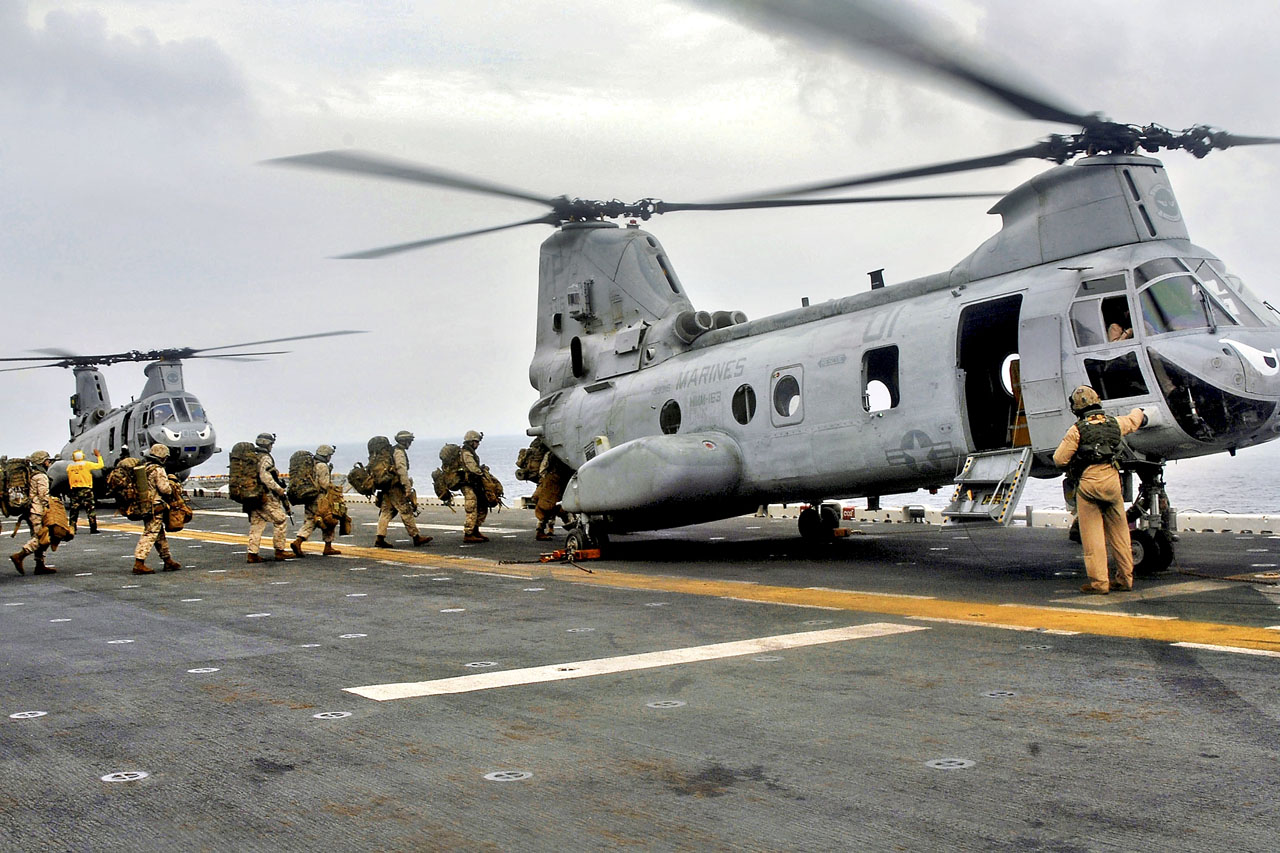
Marines boarding aboard a US Navy amphibious assault ship, December 14, 2001
(Photo Johnny BIVERA - USMC)
Marines boarding aboard a US Navy amphibious assault ship, December 14, 2001
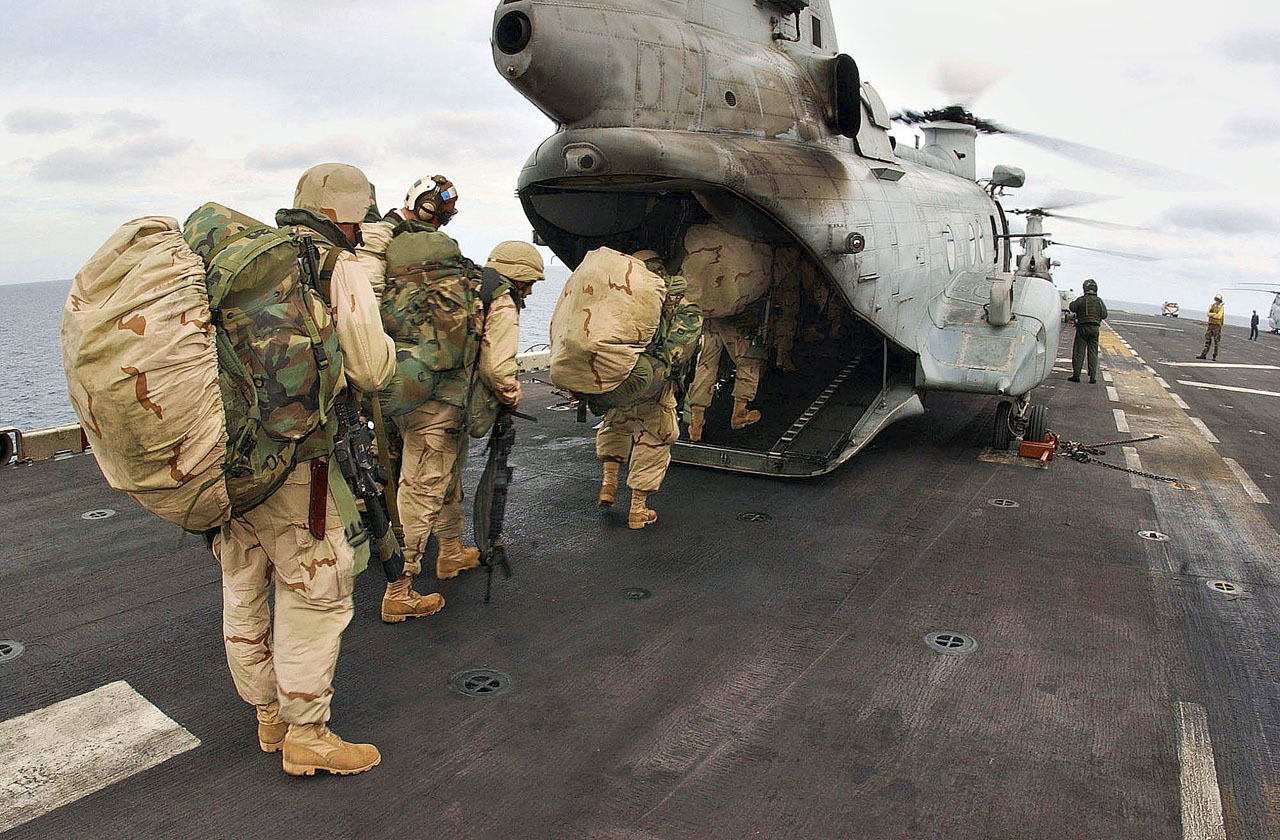 (Photo Johnny BIVERA - USMC)
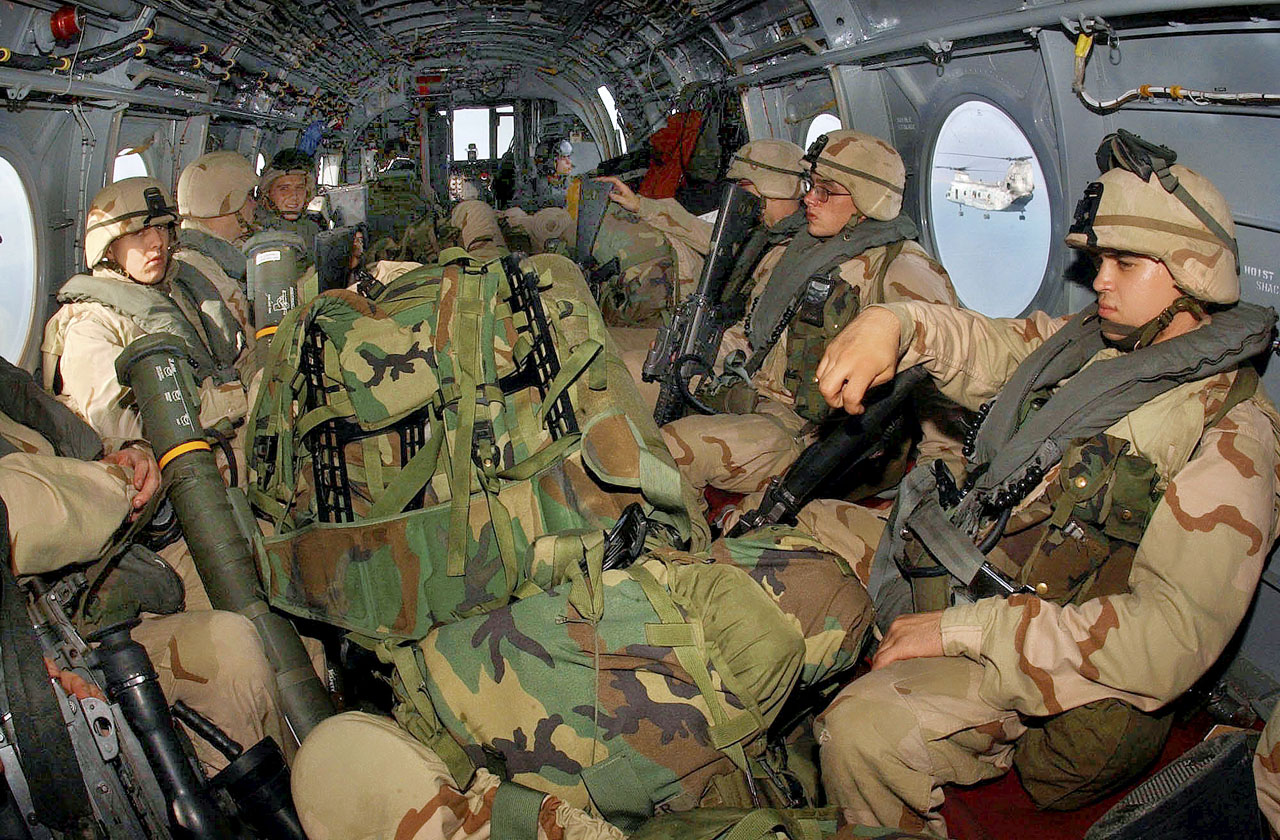 (Photo Johnny BIVERA - USMC)
Troops and their equipment inside the cargo hold
(Photo Johnny BIVERA - USMC)
Troops and their equipment inside the cargo hold
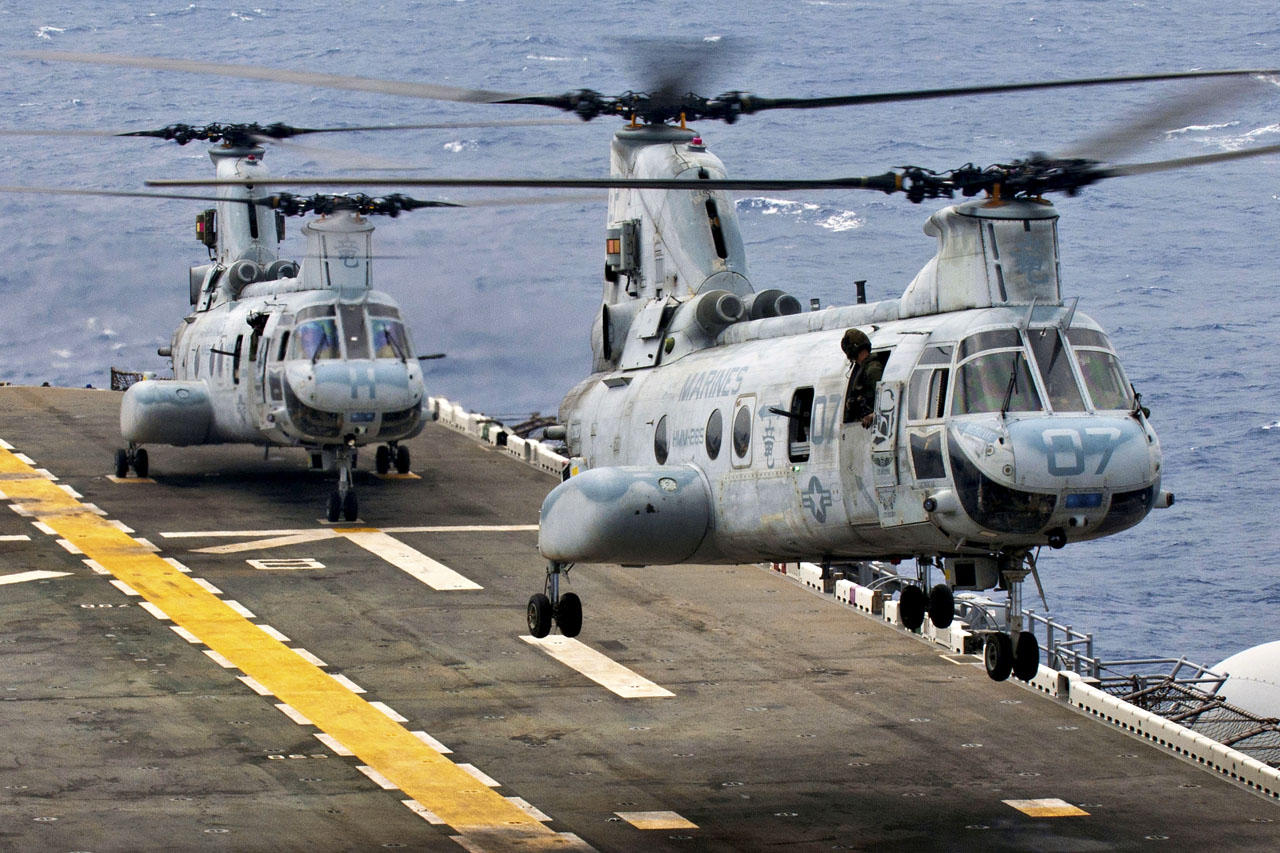 (Photo Johnny BIVERA - USMC)
Sea Knights departing for Afghanistan, December 14, 2001
(Photo Johnny BIVERA - USMC)
Sea Knights departing for Afghanistan, December 14, 2001
→ Read also: Amphibious assault
V-22 Osprey: the tiltrotor approach
The V-22 Osprey follows the cargo-helicopter concept with a large cargo hold accessible through a rear ramp. This tiltrotor adds a major advantage: the speed of an airplane in forward flight, making it particularly well suited to moving troops and equipment rapidly over long distances.
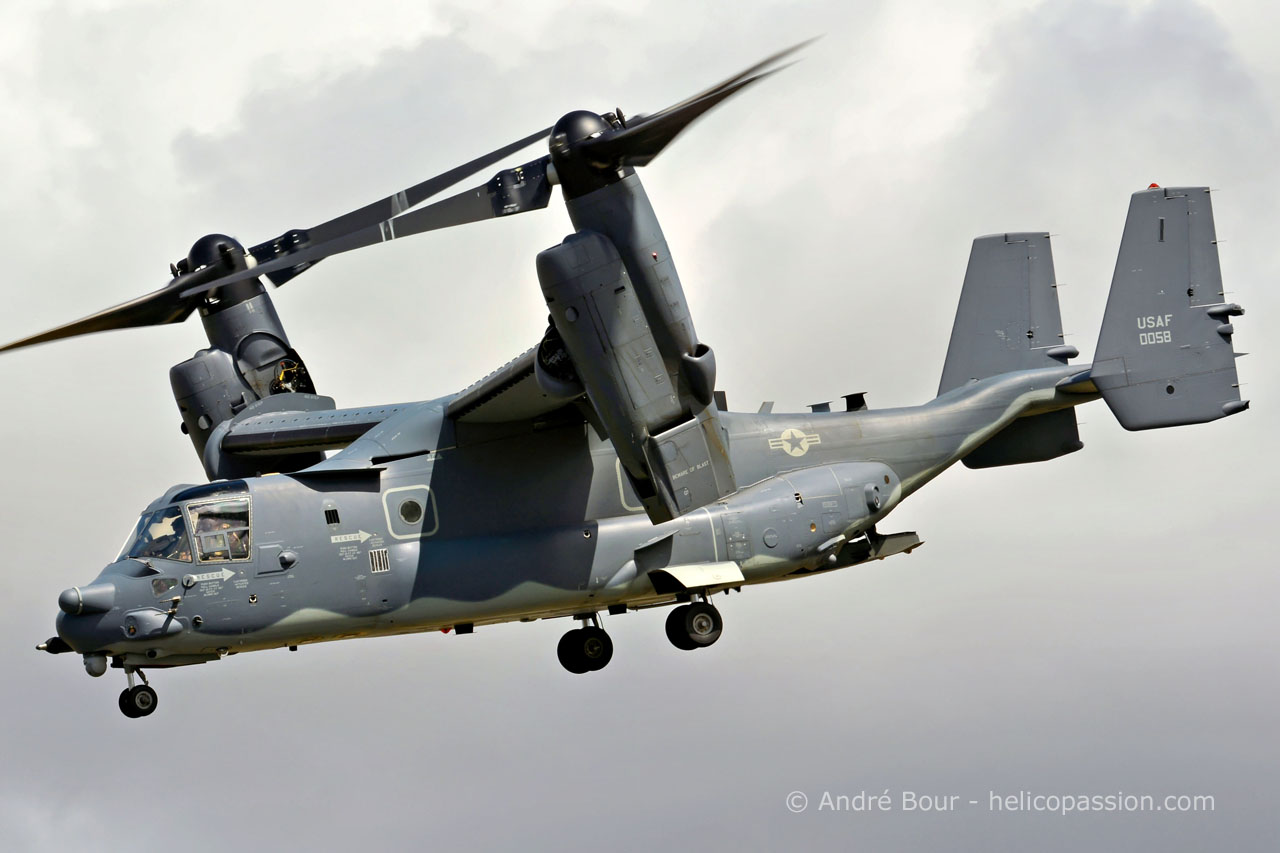 (Photo André Bour - Helicopassion)
MV-22 Osprey, selected by the Marines to replace the CH-46
(Photo André Bour - Helicopassion)
MV-22 Osprey, selected by the Marines to replace the CH-46
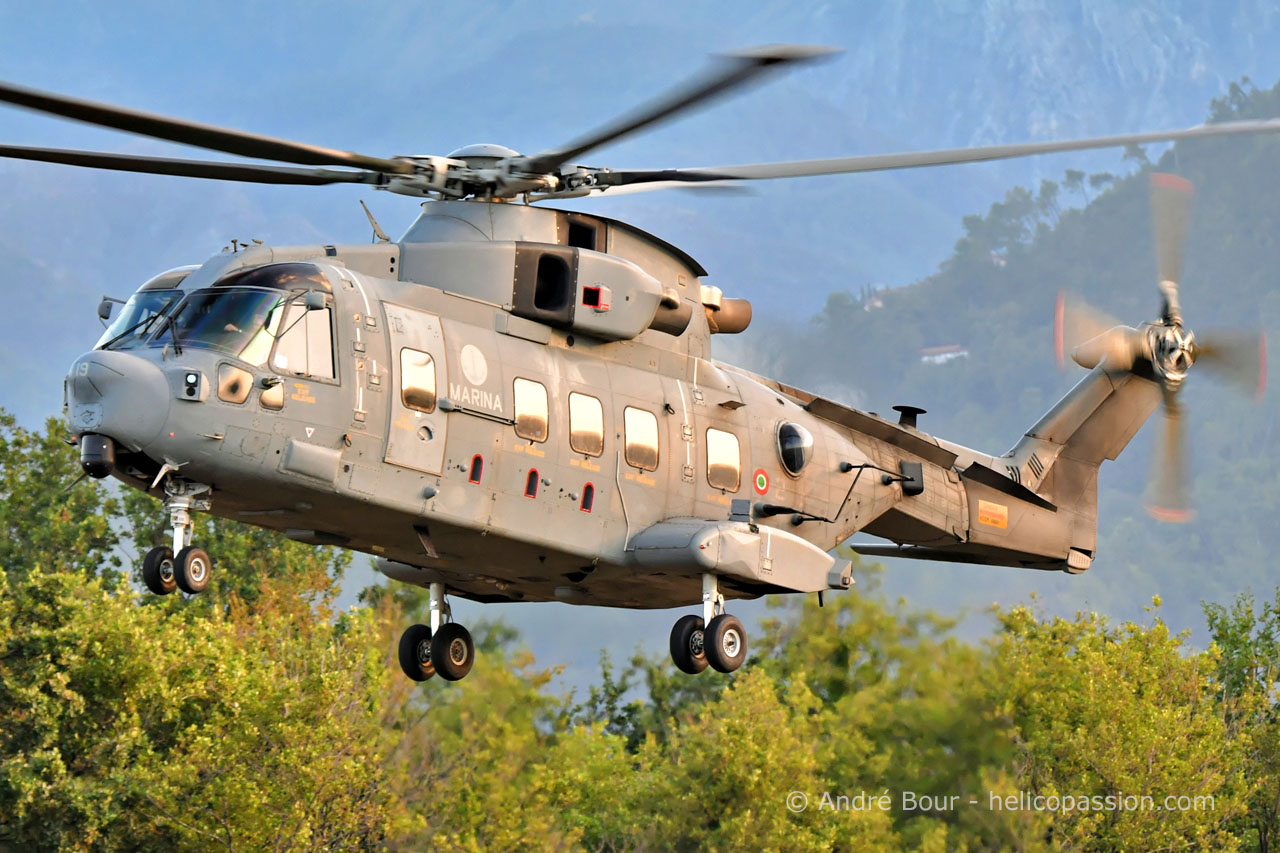
AW101 Merlin: a large modular cabin
The AW101 Merlin occupies an intermediate position between conventional troop-transport helicopters and the largest cargo helicopters.
Its cargo hold of almost 31 m³ can accommodate up to 38 troops, depending on the seating configuration, as well as freight and light vehicles loaded through the rear ramp. This flexibility allows it to switch rapidly between troop transport, logistics and specialized missions.
 (Photo André Bour - Helicopassion)
Italian AW101 Merlin
(Photo André Bour - Helicopassion)
Italian AW101 Merlin
CH-47 Chinook: the benchmark
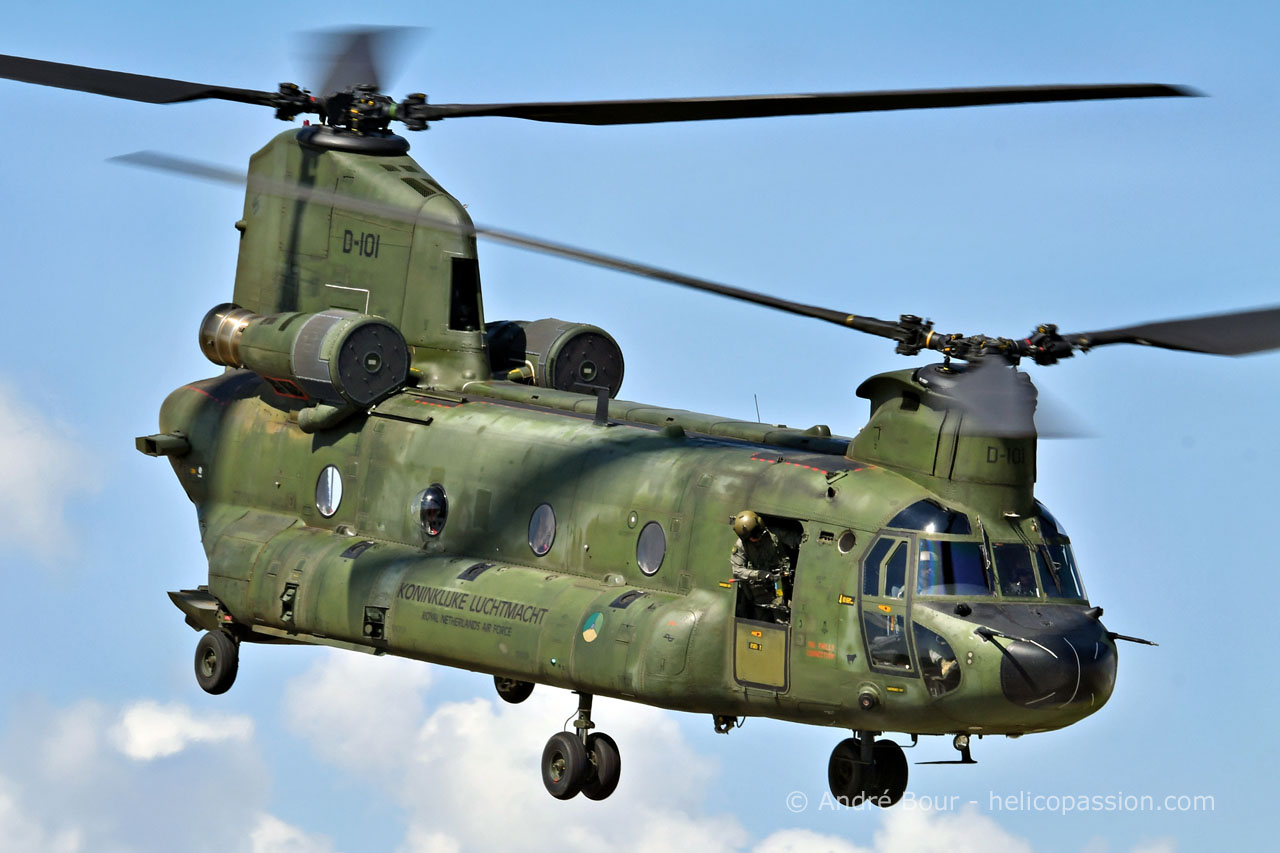
The CH-47 Chinook has become the archetypal Western military cargo helicopter. Its long cargo hold and wide rear ramp allow it to carry troops, freight and vehicles.
Its career, which began in the 1960s, continues today with modern CH-47F variants.
 (Photo André Bour - Helicopassion)
Dutch Chinook during Exercise Hot Blade 2018
(Photo André Bour - Helicopassion)
Dutch Chinook during Exercise Hot Blade 2018
CH-53: increasing cargo capability
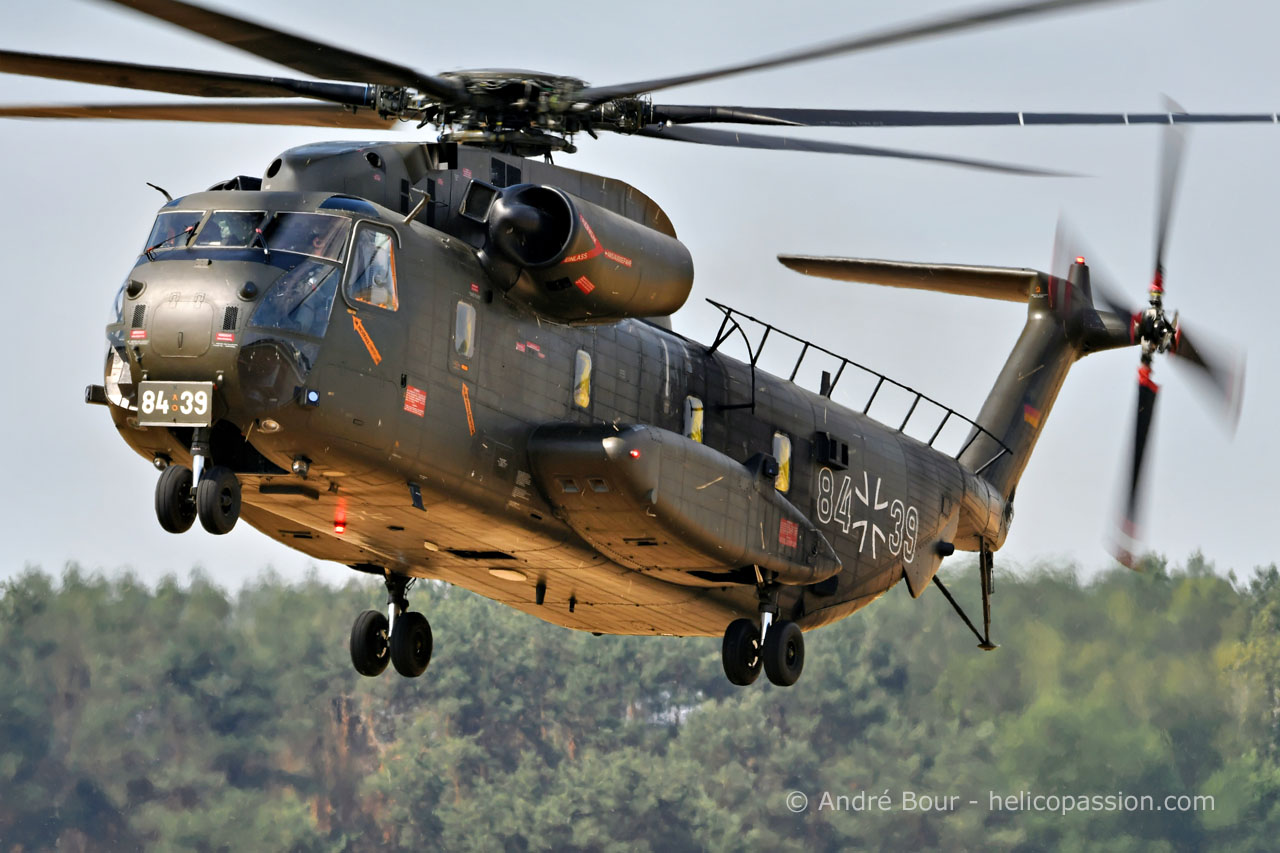
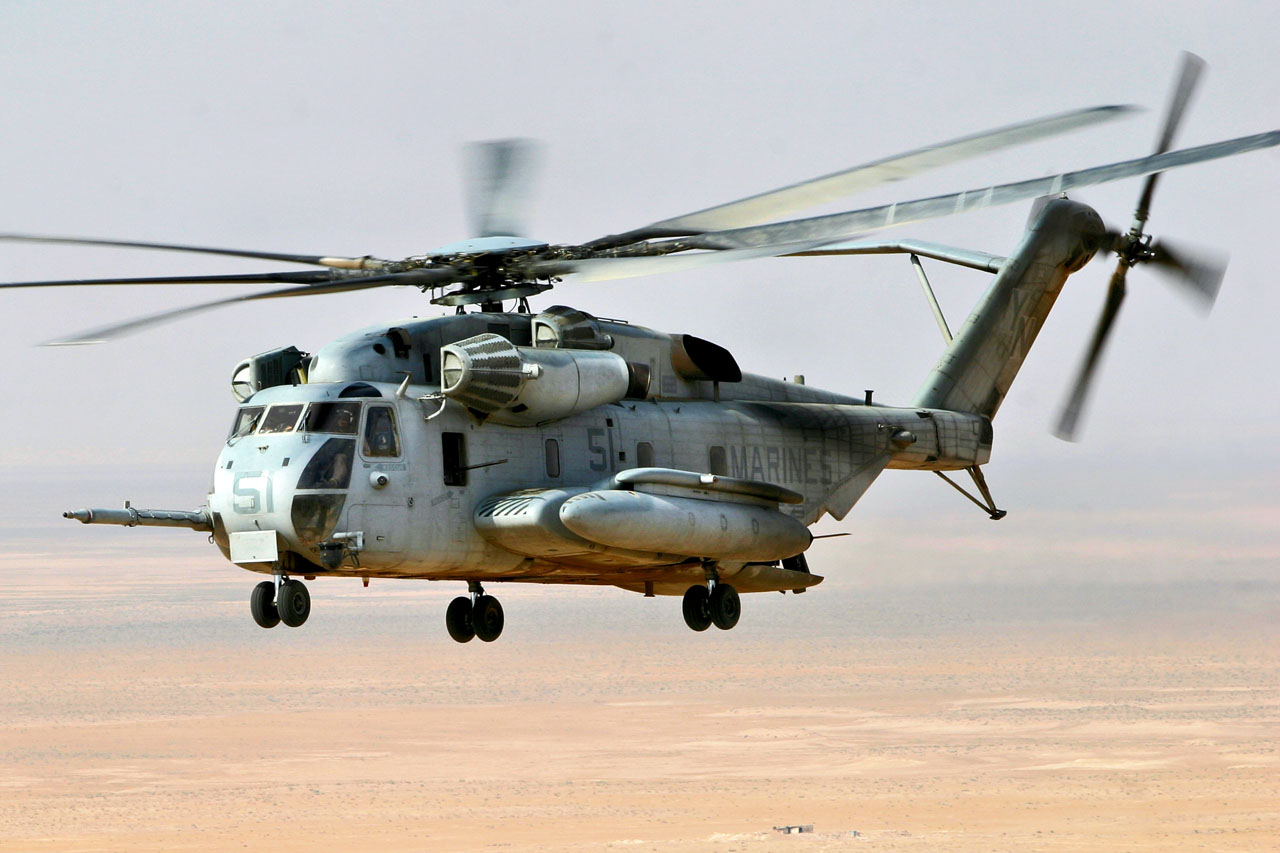
From the European CH-53G to the American CH-53E Super Stallion, the CH-53 family has progressively increased its transport capabilities.
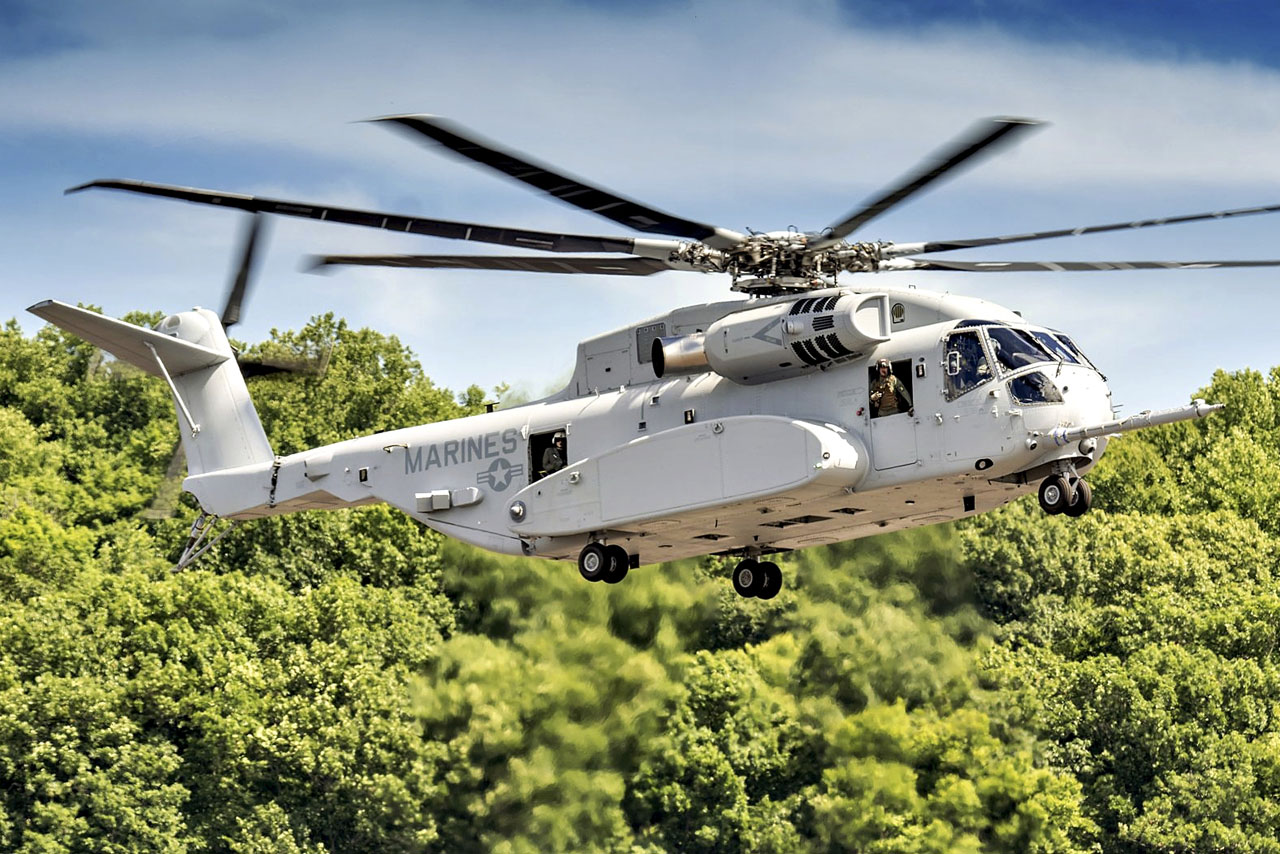
The CH-53K King Stallion takes this development much further. Its wider cargo hold is designed to accommodate pallets, heavy equipment and vehicles, with significantly greater loading capabilities than its predecessors.
The contrast is interesting: the CH-53K is a much more capable cargo transport than the CH-53E, yet its standard configuration provides only 30 troop seats.
 (Photo André Bour - Helicopassion)
German CH-53G
(Photo André Bour - Helicopassion)
German CH-53G
 (Photo Christopher R. Rye - US Marines)
US Marine Corps CH-53E Super Stallion, Al Asad, Iraq, November 5, 2004
(Photo Christopher R. Rye - US Marines)
US Marine Corps CH-53E Super Stallion, Al Asad, Iraq, November 5, 2004
 (Photo SIKORSKY)
US Marine Corps CH-53K King Stallion
(Photo SIKORSKY)
US Marine Corps CH-53K King Stallion
Mi-26: on another scale
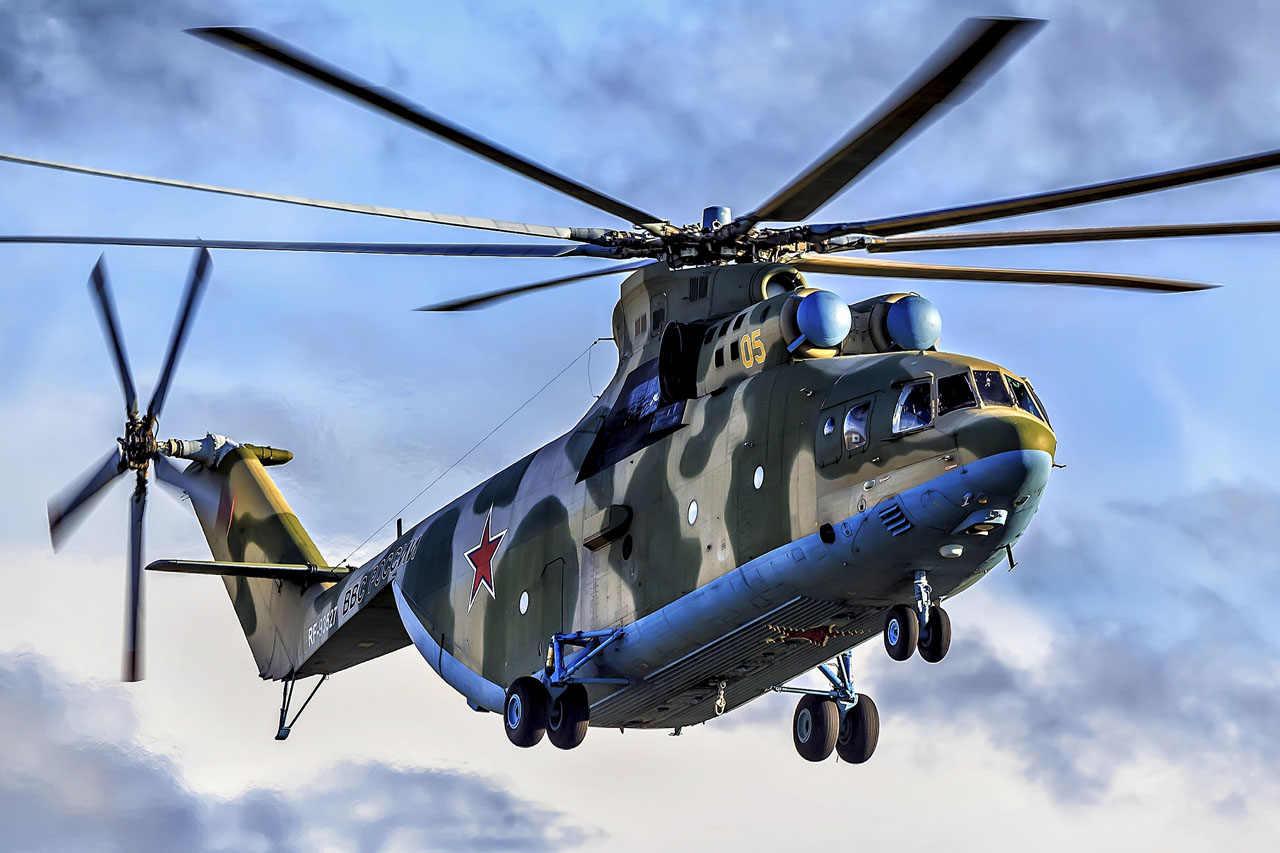
With the Mi-26, the dimensions change dramatically. Its vast cargo hold can accommodate up to 82 troops or around 20 tonnes of payload.
Vehicles, heavy equipment and particularly bulky loads can be carried inside its enormous cargo hold. Its capabilities place it in a class of its own among cargo helicopters.
 (Photo Vladislav Perminov)
Russian Army Mi-26, 2018
(Photo Vladislav Perminov)
Russian Army Mi-26, 2018
Carrying vehicles
This is probably where the concept of a “cargo helicopter” becomes most obvious.
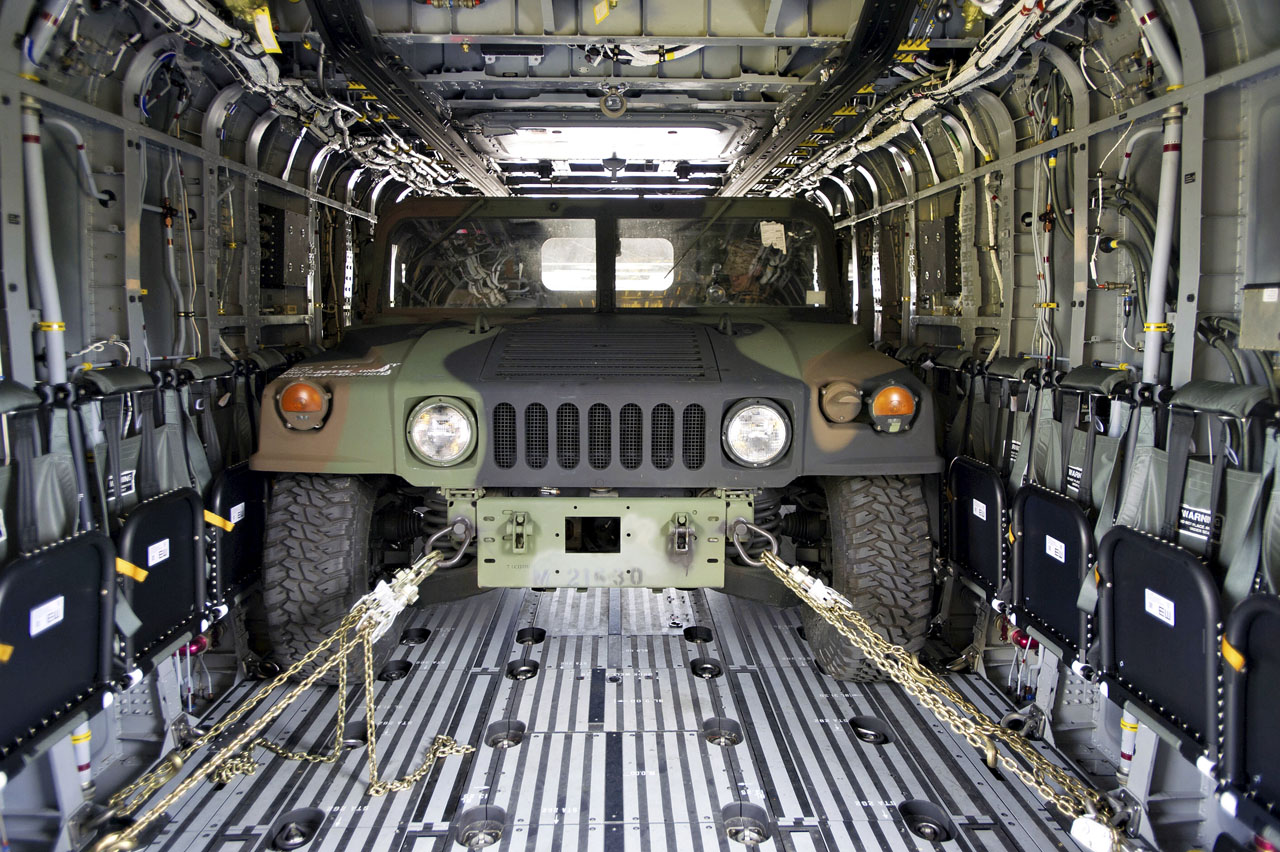
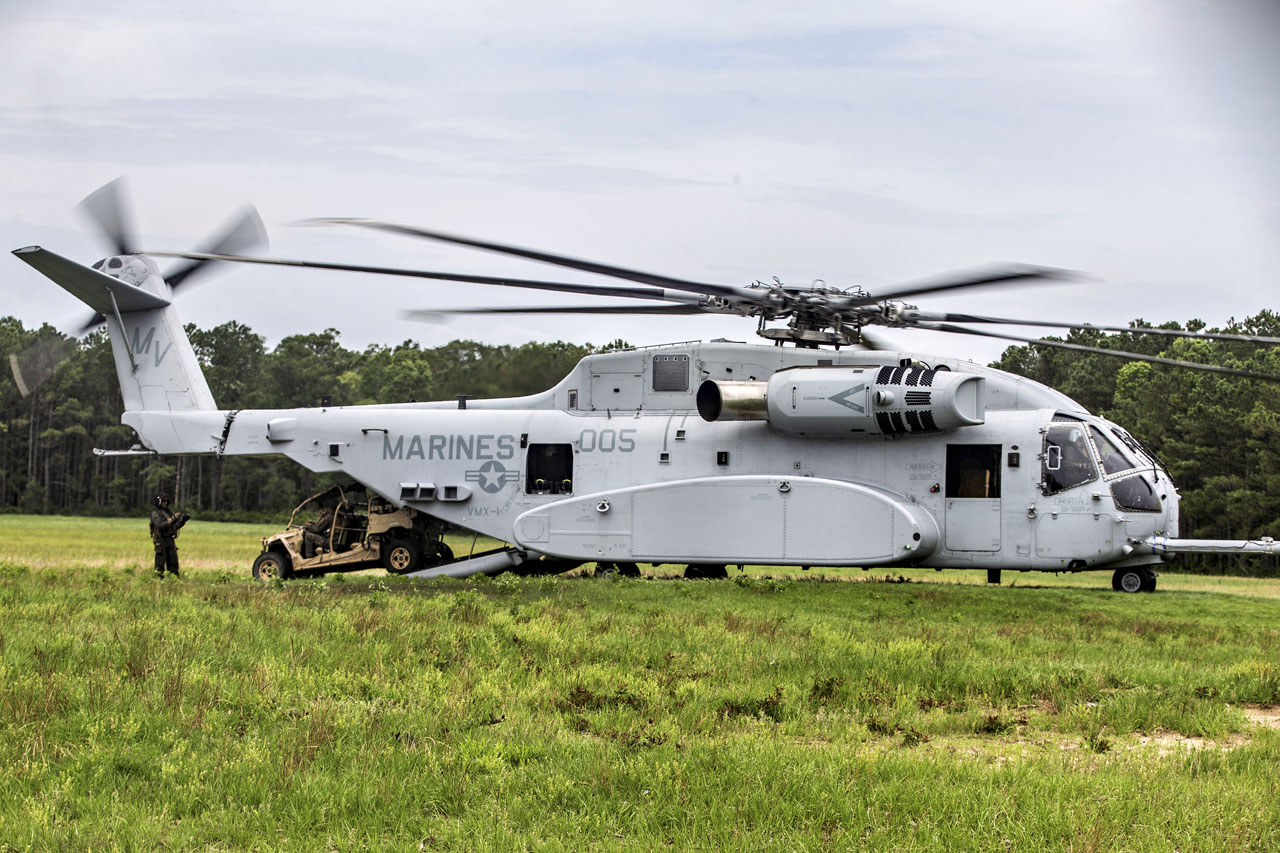
When the seats are folded or removed, the cabin floor can accommodate much bulkier loads. Some aircraft are large enough to carry light or tactical vehicles directly through their rear ramp.
 (Photo Lockheed-Martin)
Humvee inside a CH-53K with the troop seats folded
(Photo Lockheed-Martin)
Humvee inside a CH-53K with the troop seats folded
 (Photo Yuritzy Gomez - US Marines)
Vehicle being loaded into a CH-53K King Stallion, June 10, 2021
(Photo Yuritzy Gomez - US Marines)
Vehicle being loaded into a CH-53K King Stallion, June 10, 2021
 (Photo João Miguel Brito - Força Aérea Portuguesa)
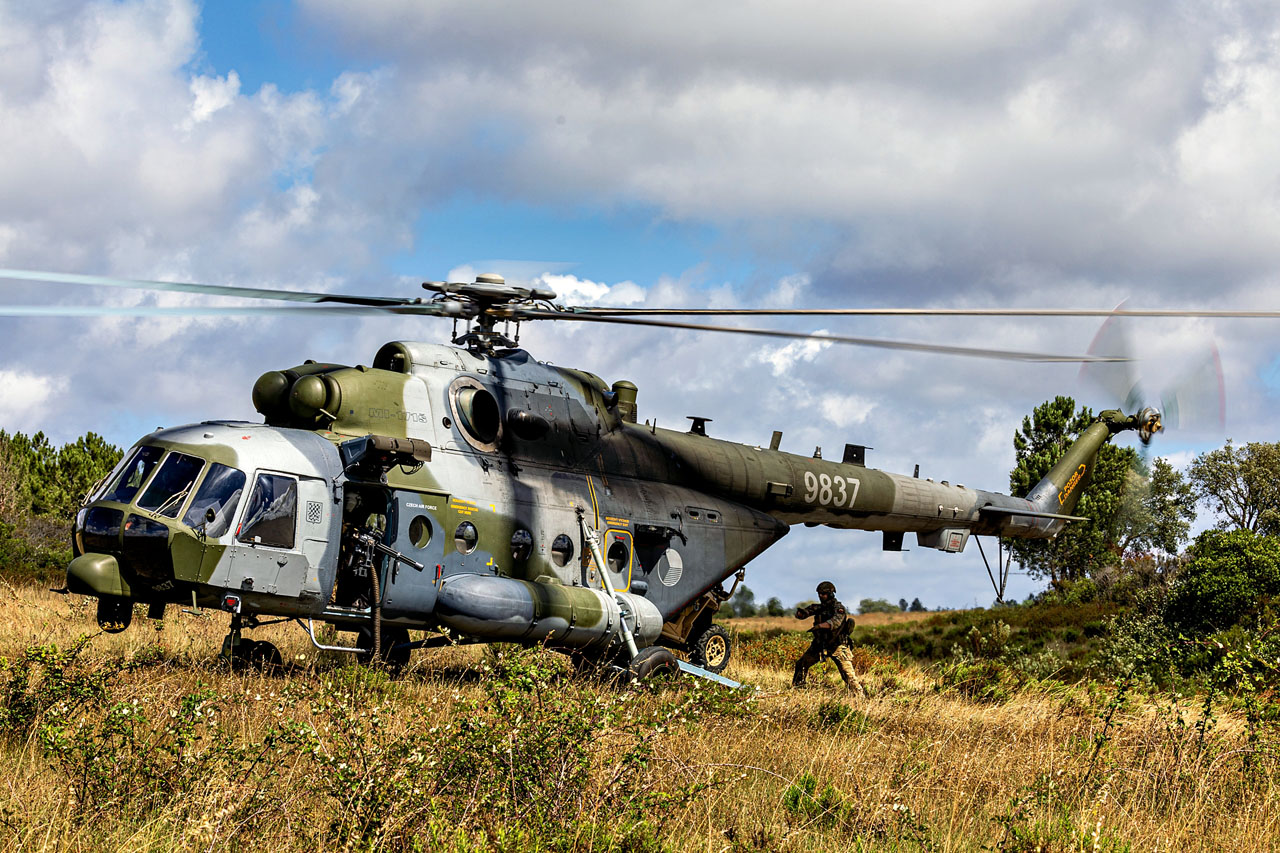
Vehicle leaving the cargo hold of a Czech Mi-17 during Exercise Hot Blade 2023
(Photo João Miguel Brito - Força Aérea Portuguesa)
Vehicle leaving the cargo hold of a Czech Mi-17 during Exercise Hot Blade 2023
 (Photo Chief Jeff Atherton - US Navy)
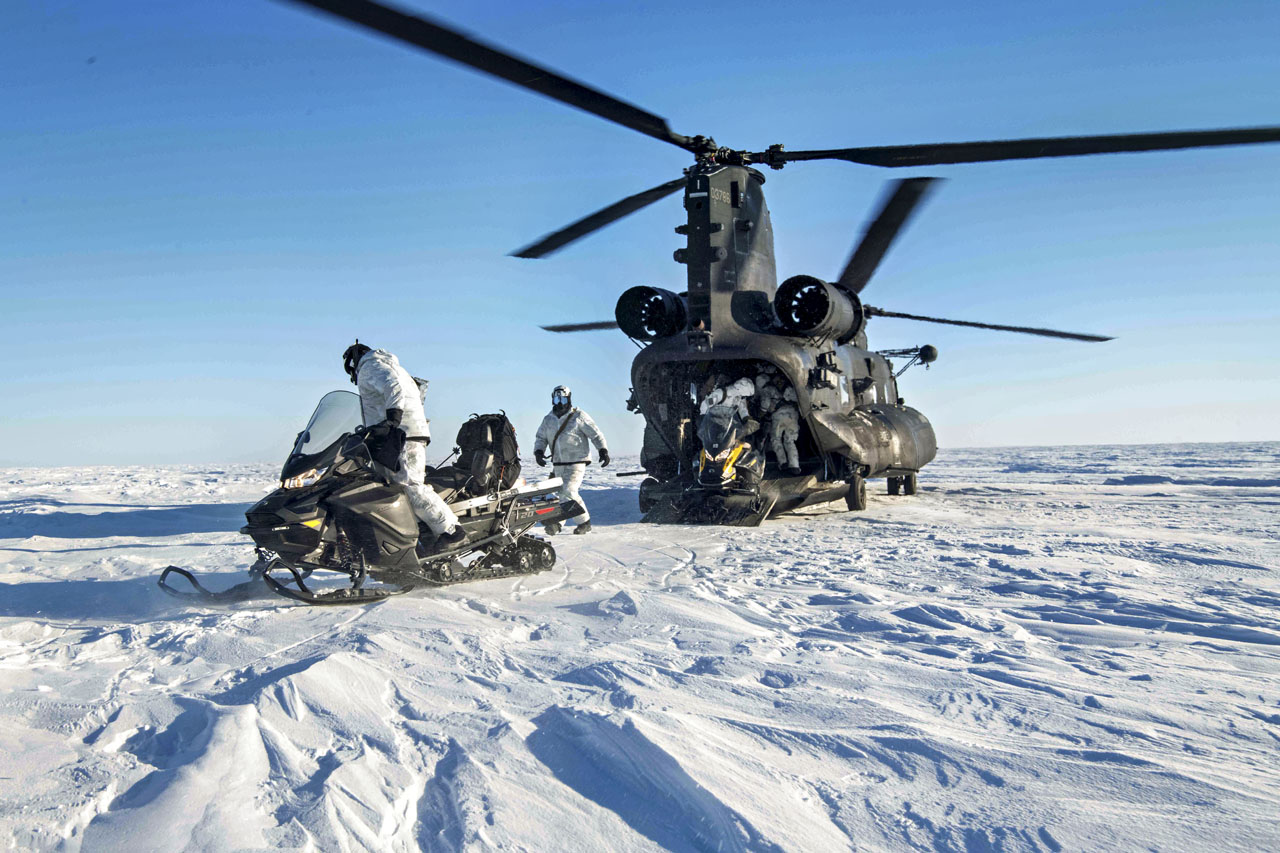
US and Norwegian special forces with their snowmobiles after disembarking from an MH-47G Chinook during Exercise Arctic Edge 24, March 6, 2024
(Photo Chief Jeff Atherton - US Navy)
US and Norwegian special forces with their snowmobiles after disembarking from an MH-47G Chinook during Exercise Arctic Edge 24, March 6, 2024
Seats that free up the cargo hold
Carrying troops should not permanently take up space needed for cargo. The seats fitted inside cargo holds are therefore designed to be folded or removed, allowing the floor to be cleared quickly.
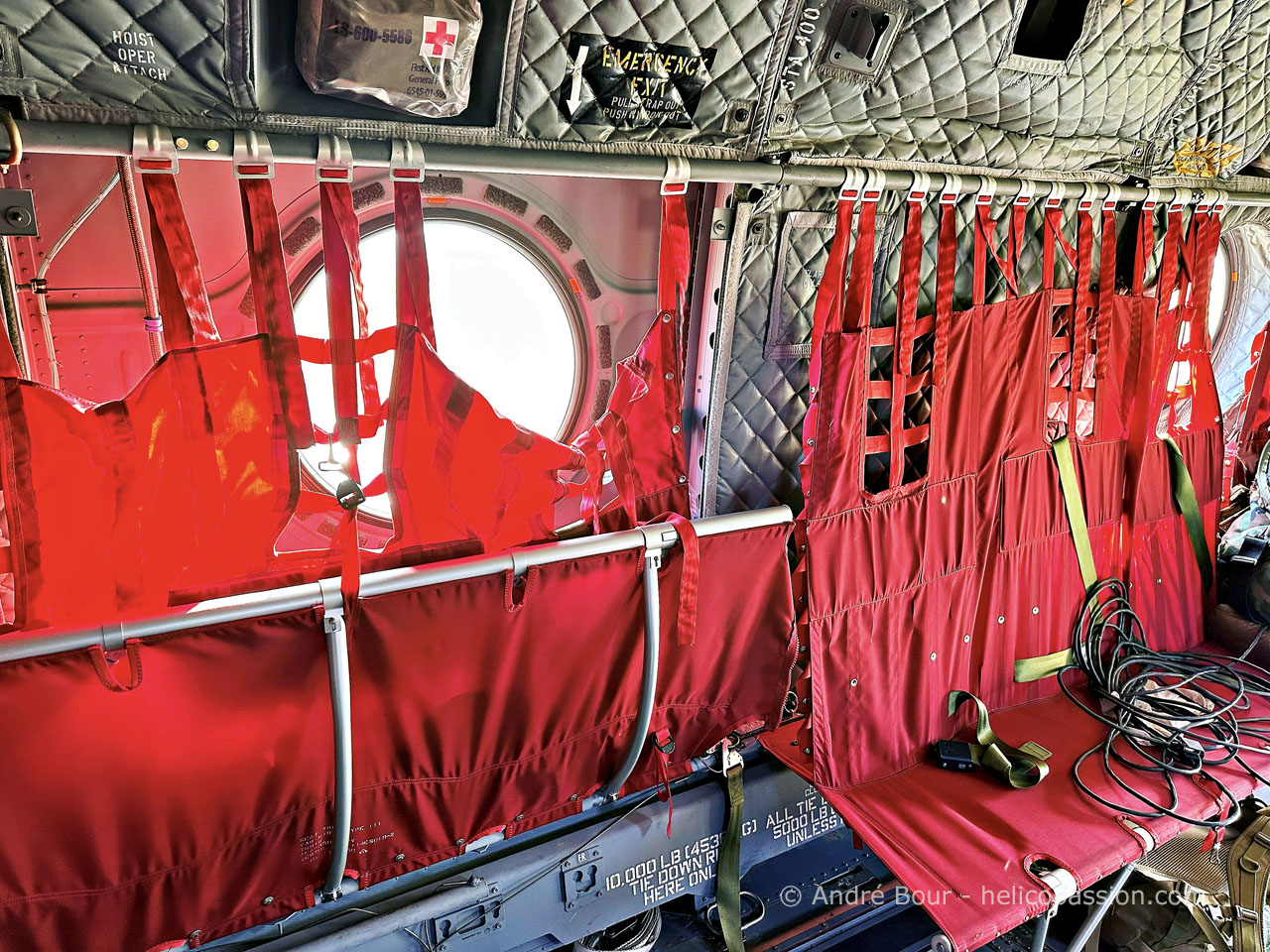
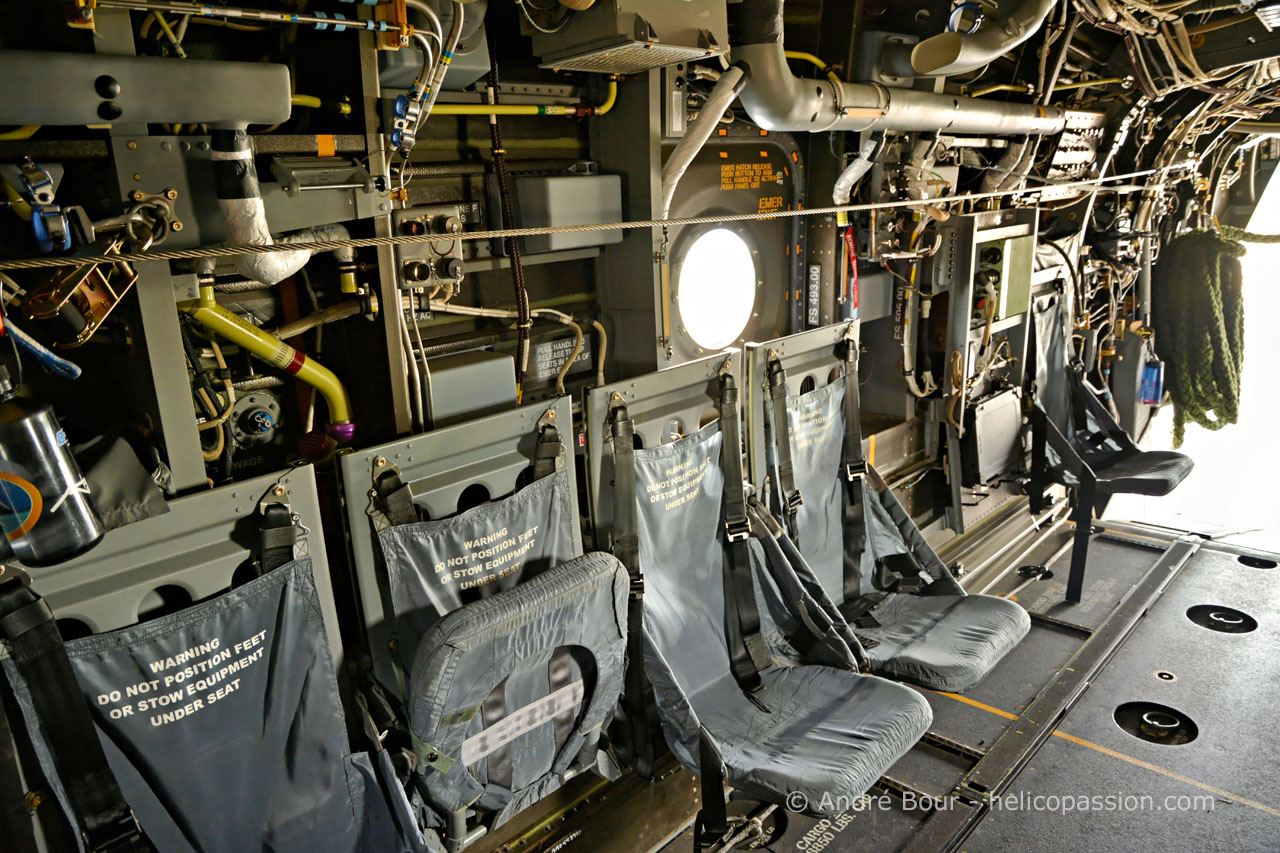
Their design has also evolved. The canvas bench seats typical of earlier generations have been joined by individual seats offering better protection in the event of an impact, although they take up more space. Their arrangement, and even their color, varies considerably from one aircraft to another.
 (Photo André Bour - Helicopassion)
Chinook cabin with red troop seats
(Photo André Bour - Helicopassion)
Chinook cabin with red troop seats
 (Photo André Bour - Helicopassion)
V-22 cabin with gray troop seats
(Photo André Bour - Helicopassion)
V-22 cabin with gray troop seats
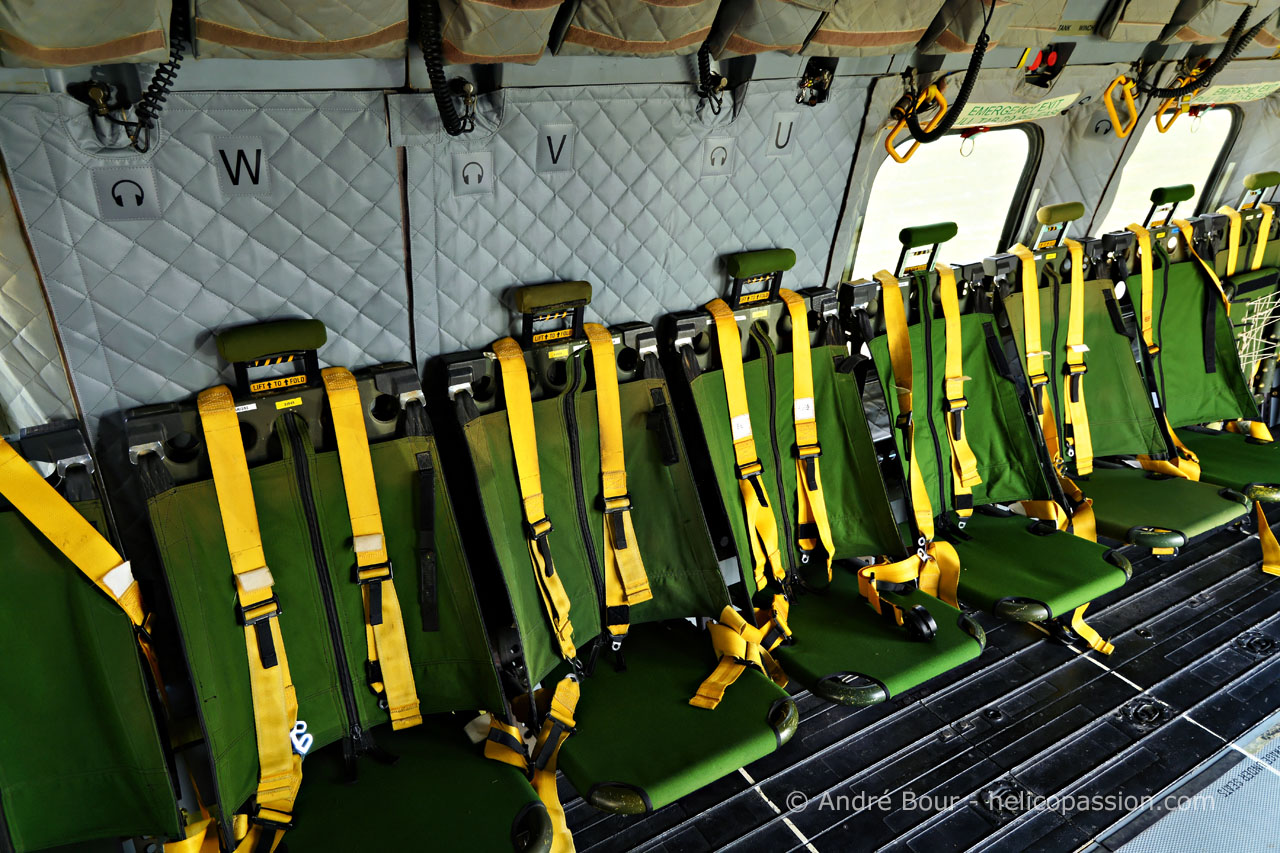 (Photo André Bour - Helicopassion)
Merlin cabin with green troop seats
(Photo André Bour - Helicopassion)
Merlin cabin with green troop seats
The Chinook's red bench seats are not unique to this helicopter. This burgundy red was a standardized color for US military troop seats and could also be found aboard aircraft such as the C-130 and C-141. Some US Air Force documents simply refer to them as “red seats”.
One explanation sometimes put forward is that the red color made blood from wounded personnel less visible. Our research found no military document confirming this. The theory also appears less likely given that equipment intended for medical evacuation, particularly aboard Black Hawks, is generally olive rather than red.
The red color may, however, have made the seats easier to identify inside a long gray or green cabin, where troops need to board quickly and find their places. This function would be consistent with military boarding procedures, although the exact historical reason for the color remains uncertain.
The color is not universal: British Merlin troop seats are green, while those fitted to US V-22s are gray.
A unique capability
Capabilities vary considerably from one aircraft to another, but they all follow the same basic principle: an easily accessible and reconfigurable internal space capable of carrying troops, freight and vehicles.
Transport aircraft and ground vehicles can move far greater quantities of equipment. But aircraft need a runway, while ground vehicles require a passable route.
Cargo helicopters are free from both constraints. They can deliver troops, vehicles or equipment directly where they are needed, then depart again without requiring any infrastructure on the ground. This ability to bring a substantial load of troops and equipment directly to a location with neither a runway nor supporting infrastructure is what gives them their unique operational value.